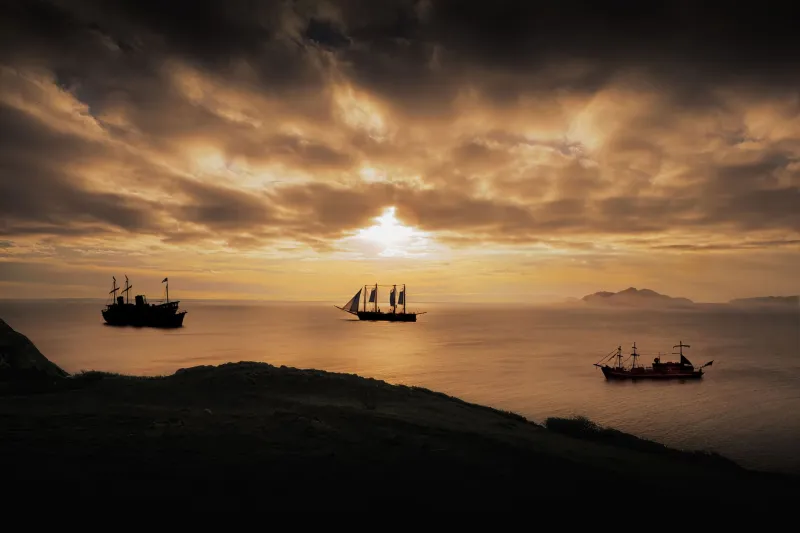
Why Pirate Crews Are the Ultimate Found Family: Unpacking the Psychology Behind Fantasy's Best Misfits
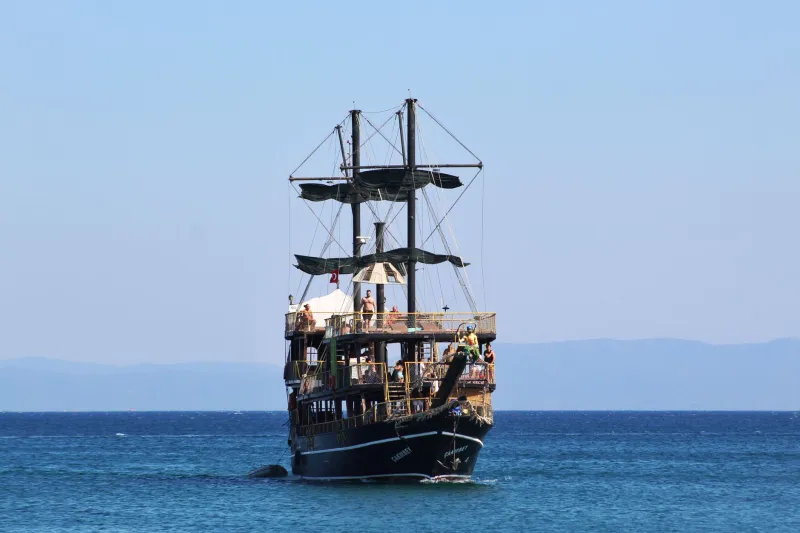
At some point while playing Sea of Thieves, or watching a pirate crew argue on screen, or reading about a ship full of outcasts sailing toward something dangerous and beautiful, you probably felt it: that warm, slightly irrational attachment to people who don't exist and a ship that's definitely going to sink.
You're not alone. Pirate crews are one of storytelling's most reliable emotional delivery systems, and there's actual psychology behind why they work so well. Let's break it down, because understanding why you cry at fictional sailors is important life knowledge.
The Ship as a Closed System
Before we get into characters, let's talk about the boat. Specifically, why the boat matters so much as a narrative container.
A ship at sea is physically isolated. There's no going home, no calling for backup, no running to a different social group when things get uncomfortable. The crew is stuck with each other, and that constraint is dramatically gold. It forces relationships to develop faster, conflicts to escalate more intensely, and bonds to calcify under pressure in ways that land-based stories often can't replicate.
Game designers understand this intuitively. Sea of Thieves built its entire social architecture around ship crews precisely because the shared vessel creates instant stakes. Your crewmate's mistake is your problem. Their triumph is your treasure. The boat makes everything collective, and collective stakes generate collective investment.
This is why pirate crew stories feel more urgent than many other ensemble narratives. The isolation isn't just atmospheric—it's structural. It forces the question: Who are you when there's nowhere else to go?
The Charismatic Captain Problem
Every great pirate crew narrative has to solve the same central tension: the captain needs to be compelling enough to follow but flawed enough to question.
Too authoritative, and your crew becomes props. Too weak, and the story loses its spine. The best pirate captains in fantasy gaming and fiction operate in this uncomfortable middle space—inspiring loyalty not through perfection but through a specific quality that's harder to define: they make people feel like the adventure is worth the risk.
Think about how Skull and Bones approaches leadership dynamics, or how narrative RPGs in the pirate genre consistently give players captain roles that require managing crew morale as a resource. You're not just commanding—you're convincing. Every decision is a negotiation between your vision and your crew's willingness to follow it.
This maps directly onto real organizational psychology. Research on team cohesion consistently shows that people follow leaders they trust to see them, not just use them. The best fictional pirate captains—Jack Sparrow's chaotic genius, the player-character captain in countless nautical RPGs, even Stede Bonnet's absurd sincerity—work because they make their crews feel chosen, not conscripted.
Loyalty vs. Self-Interest: The Eternal Mutiny Question
Here's where pirate crew dynamics get genuinely interesting from a psychological standpoint: every crew member has a compelling reason to betray the captain at any given moment.
The treasure is right there. The captain is distracted. The rival ship is offering better terms. Pirate fiction is saturated with these moments because they're the ultimate test of found family logic. Do you stay loyal to the people who've become your chosen kin, or do you prioritize your individual survival and gain?
The best pirate stories don't make this question easy, and gaming handles it particularly well. In narrative-heavy titles like Pillars of Eternity II: Deadfire—one of the most psychologically rich pirate-themed RPGs ever made—crew members have genuine ideological conflicts with each other and with the player's choices. Loyalty isn't guaranteed. It's earned through a thousand small decisions that accumulate into either trust or fracture.
This resonates with American audiences in particular because it mirrors a very familiar cultural tension: the myth of radical individualism versus the genuine human need for community. Pirates are the ultimate individualists—that's the archetype. But pirate crews are the story's argument that individualism alone isn't enough. You need your people. Even when your people are chaotic, unreliable, and probably planning something.
The Misfit Magnet: Why We Love Crews of Outcasts
Let's be real about something: pirate crews in fantasy storytelling are almost never assembled from society's winners. They're the people who got kicked out, ran away, were betrayed, or simply never fit anywhere else. That's not accidental—it's the entire emotional foundation.
Found family narratives work because they offer a fantasy of belonging without prerequisite. You don't have to be born into the right family or perform the right identity to earn your place on the ship. You just have to show up and be useful and—eventually, gradually—be known.
For audiences who've ever felt like they didn't quite fit the social structures they were born into (which is most people, at some point in their lives), this is extraordinarily powerful. The pirate ship says: there's a place for the weird ones, the angry ones, the ones who burned their bridges and survived anyway.
Games like Sea of Thieves operationalize this by letting players build their own crew identity—custom ships, chosen crews, self-defined legends. The game essentially says: your misfit crew is the point, not the obstacle. That's a design philosophy with real emotional intelligence behind it.
What Makes Us Stay for the Whole Voyage
Ultimately, the reason pirate crew dynamics hit so hard in fantasy storytelling comes down to something simple: these stories are about whether connection is possible under impossible conditions.
The sea is trying to kill you. The treasure is cursed. The Navy is three ships behind you. Your first mate has questionable motives and your cook is hiding something. And yet—and yet—you're all still here, on this ridiculous boat, sailing toward something that might destroy you.
That's not just adventure. That's a story about choosing your people anyway, in full knowledge of the risk. And that particular story, dressed up in tricorn hats and sea spray and the occasional kraken, turns out to be one we never get tired of hearing.
Now stop crying at your screen and get back to your crew. The horizon isn't going to sail to itself.