Drop Anchor and Turn It Up: The Wild, Weird History of Pirate Music Across Games and Screen
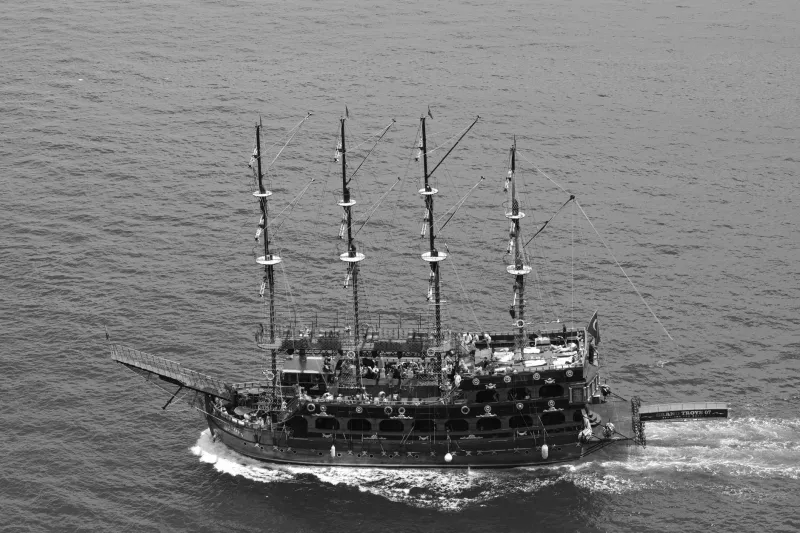
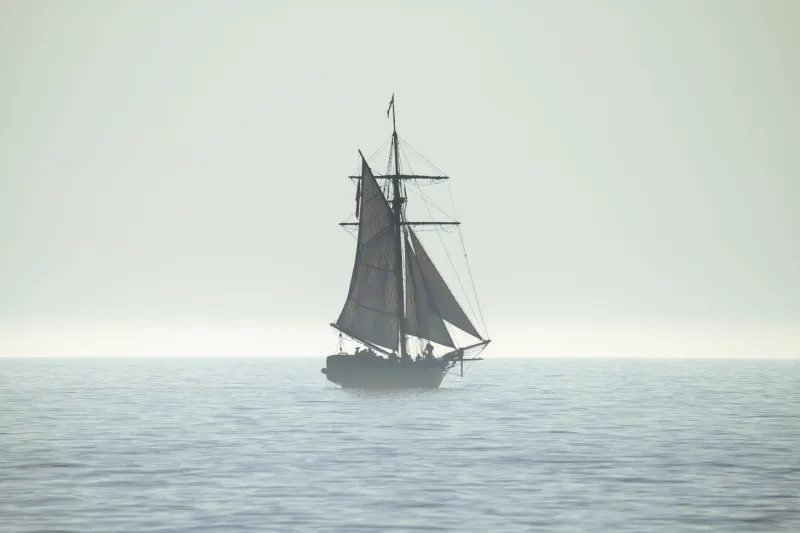
Close your eyes for a second. Picture a wooden ship cutting through dark water. Sails full. Stars out. The crew moving with practiced efficiency across the deck. Now imagine that scene with absolutely no music. Just wind. Just creaking wood.
Kind of kills it, right?
That's because pirate fantasy, maybe more than any other genre in entertainment, lives or dies on its audio design. The music isn't just backdrop — it is the adventure. It tells you when to feel wonder, when to feel dread, when to feel the specific giddy joy of watching someone swing across a ship's rigging on a rope. The right score doesn't just accompany a pirate story. It makes you believe you're in one.
So let's talk about how we got from tavern fiddles to thundering orchestra sections to chiptune bangers to full synthwave voyages — and why pirate music has become one of the most creatively rich and delightfully weird audio traditions in all of entertainment.
The Folk Foundation: Where It All Started (And Where It Never Really Left)
Before any composer sat down to write a pirate theme, the source material was already there: actual maritime folk music. Shanties — the work songs sailors used to coordinate labor on ships — are the bedrock of the entire tradition. And they're effective for reasons that have nothing to do with nostalgia.
Shanties have a call-and-response structure built for participation. They have rhythm designed to synchronize physical effort. They're repetitive in the way that gets into your bones and stays there. These are not accidental qualities. They're engineering. And when entertainment composers started building pirate soundscapes, they borrowed that engineering wholesale.
The acoustic instruments that define the folk maritime sound — fiddle, accordion, tin whistle, bodhran — show up in basically every major pirate franchise's musical DNA. Even when a score is primarily orchestral, you'll usually find those textures woven in somewhere. They're the signal that says this is the ocean, this is salt air, this is adventure. Audiences have been conditioned to respond to them, and composers know it.
The recent sea shanty renaissance on social media — yes, the whole TikTok moment — wasn't a fluke. It was proof that the folk foundation is genuinely load-bearing. People connected with those songs immediately, even people who had never thought about maritime history in their lives. The music does something primal. It always has.
The Video Game Revolution: When Pirate Audio Got Weird in the Best Way
Here's where things get genuinely fun. The history of pirate music in video games is a history of composers doing increasingly creative and surprising things within constraints, and then doing even more creative and surprising things once the constraints were removed.
Early pirate games worked with chiptune — the bleepy, bloopy synthesized sound of early gaming hardware — and some of those composers did extraordinary things with almost nothing. The Monkey Island series is the canonical example, and it deserves every bit of the reverence it gets. The iMUSE system that debuted in those games dynamically shifted music based on player action, meaning the soundtrack wasn't just accompanying the adventure, it was responding to it. That's not a small innovation. That's a fundamental rethinking of what game audio could do.
As hardware improved, pirate game scores got bigger and more cinematic. Full orchestras became possible. Choir arrangements. Sweeping brass. The kind of music that made you feel like you were living inside a film score. Games like Assassin's Creed IV: Black Flag went all-in on this approach, pairing a genuinely excellent orchestral score with actual sea shanties performed by real sailors aboard the player's ship. The result was an audio experience that felt both epic and intimate — grand enough to match the open world, personal enough to make the ship feel like home.
But the most interesting development in pirate game audio might be what happened when composers started deliberately subverting the tradition. Electronic elements crept in. Synthwave showed up. Pirate aesthetics started getting mashed up with retrofuturism, with horror, with comedy. Games started using audio to signal genre — to tell players this isn't your grandfather's pirate adventure, this is something stranger and newer and weirder.
Orchestral Enormity: When Hollywood Decided Pirates Were Operatic
If video games were the laboratory where pirate audio got experimental, Hollywood was the place where it got operatic. And the shift in scale was genuinely dramatic.
The Pirates of the Caribbean franchise didn't just make pirate movies mainstream — it redefined what a pirate score could sound like. Hans Zimmer and Klaus Badelt built a musical world that was massive, propulsive, and completely committed to its own mythology. The main theme is one of those pieces of music that has become so culturally embedded that it's almost impossible to hear it without immediately picturing a specific visual aesthetic. That's not an accident. That's decades of extremely calculated audio branding.
What made that score particularly interesting was its willingness to be ridiculous in the best way. The music understood that these movies were operatic absurdist adventures, and it matched that energy. It wasn't trying to be restrained or tasteful. It was trying to make you feel like you were watching the most important thing that had ever happened, which is exactly the right approach for a movie about a man in a hat who fights skeletons.
Film and television since then have had to reckon with that legacy. Some productions lean into the cinematic grandeur. Others deliberately pull back toward folk authenticity. The most interesting ones find ways to do both — using the orchestral enormity for big moments while grounding quieter scenes in acoustic intimacy.
The Synthwave Seas: Where Pirate Audio Is Headed
Okay, so here's the frontier, and it is genuinely exciting. A growing number of creators — indie game developers, content creators, musicians working independently — are taking the pirate audio tradition and running it through a synthesizer, and the results are something genuinely new.
Synthwave pirate music shouldn't work. On paper, it sounds like a category error. But in practice, it taps into something real: the shared DNA between the retrofuturism of synthwave aesthetics and the timeless escapism of pirate fantasy. Both are about imagining a version of the world that is more vivid, more dangerous, and more beautiful than the one you actually live in. Both are fundamentally nostalgic for something that never quite existed.
When you hear a sea shanty melody played over a pulsing electronic beat, with synthesizer waves building underneath and neon-soaked reverb on everything, it doesn't feel like a contradiction. It feels like a portal. And portals, as any pirate worth their sea legs knows, are absolutely worth sailing toward.
The evolution of pirate music is far from over. If anything, it's accelerating — getting stranger, richer, and more adventurous with every passing year. Which, honestly, is exactly what you'd want from music about people who sail off the edge of the map just to see what's there.