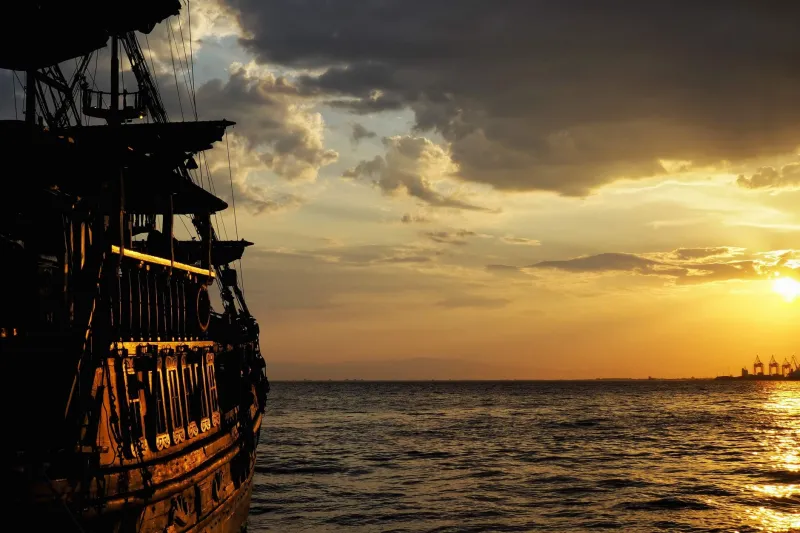
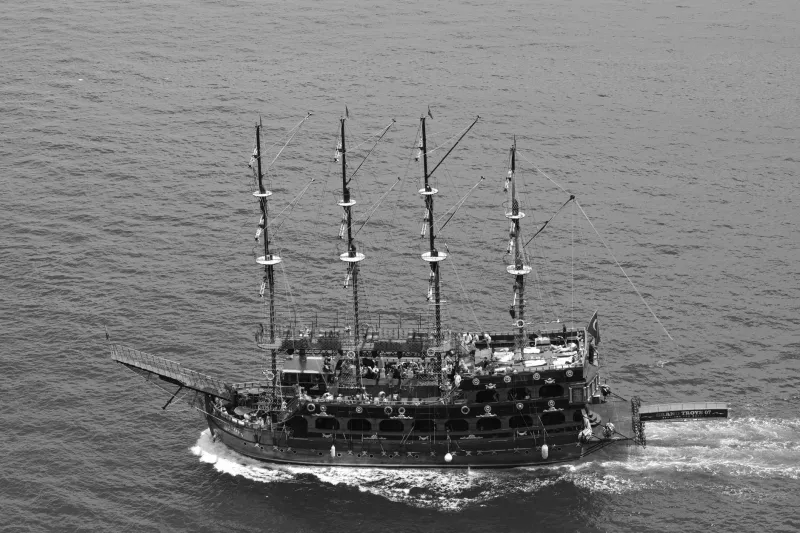
No Ocean Required: How the Pirate Aesthetic Took Over Fantasy Worlds That Have Never Seen a Wave
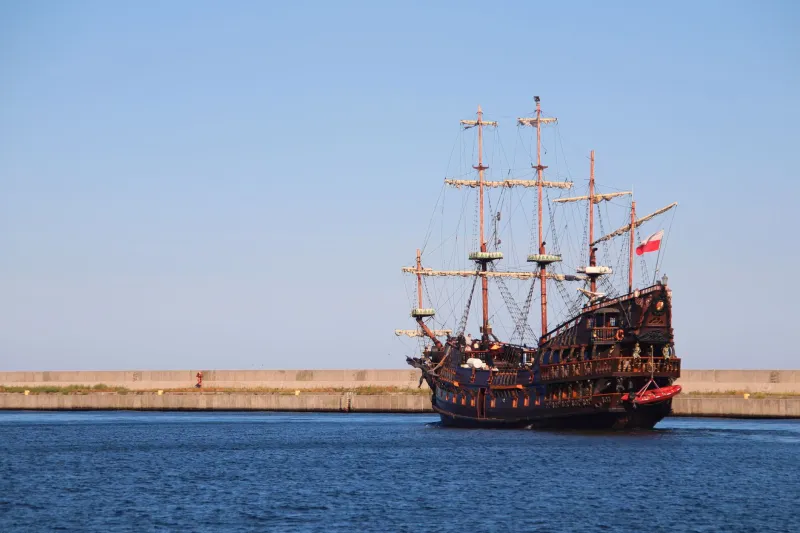
Somewhere along the way, pirates escaped the ocean. Not literally—they're not real, calm down—but as an aesthetic, a cultural shorthand, a set of storytelling tools, pirate imagery has been quietly colonizing fantasy settings that have never seen a single wave. And honestly? We're here for it.
Sky pirates. Desert corsairs. River raiders with black flags and codes of honor. Airship buccaneers who've never gotten their boots wet but absolutely have opinions about treasure distribution and the proper chain of command. The pirate aesthetic, it turns out, is basically a modular kit that creative people keep disassembling and reassembling in wildly different environments—and the results are some of the most inventive worldbuilding in contemporary fantasy gaming and fiction.
But why? What is it about pirate culture specifically that makes it so portable? Why do game designers keep reaching for the tricorn hat even when their world map doesn't have a coastline? Let's dig in.
The Kit That Fits Everywhere
First, it's worth being honest about what the pirate aesthetic actually is when you strip away the salt and the sea shanties. At its core, it's a bundle of very specific narrative ingredients: an outlaw community operating outside mainstream society's rules, a rigid internal code that governs behavior within the group, a mobile home base (the ship, or whatever replaces it), a charismatic and morally complicated leader, a raiding economy, and a strong visual identity that signals danger and freedom simultaneously.
Now notice: exactly none of those ingredients require water. Every single one of those elements can be translated to a desert, a sky, a river delta, a cave network, or the interior of a massive floating rock formation. The ocean is the default setting, not the necessary one. Once creators realize this, the floodgates (poor choice of words, maybe) open wide.
Gaming has been particularly enthusiastic about exploring this realization. The Final Fantasy series has been running sky pirate variations for decades, most memorably in Final Fantasy XII, where the entire political and economic ecosystem of Ivalice is built around airship travel and the pirates who raid those lanes. The sky replaces the sea so completely that it barely registers as a substitution—it just is the world's geography, and the pirate culture that emerged from it feels entirely organic.
Desert Sands and the Skull and Crossbones
Desert settings have proven particularly fertile ground for pirate aesthetics, partly because deserts share some key characteristics with oceans: they're vast, they're hostile to the unprepared, they're navigated with specialized knowledge, and they're full of routes that can be controlled, taxed, or raided by whoever has the power to do so.
Caravan raiders in fantasy fiction often get coded with explicitly pirate-adjacent imagery and culture—flags, codes, a captain-first command structure, a share-based economy for distributing loot. Games like Path of Exile have featured desert-dwelling outlaw factions that borrow heavily from pirate archetypes. Tabletop RPG settings have been doing this for years, with Dungeons & Dragons sourcebooks populating desert regions with raider cultures that function almost identically to their nautical counterparts, just with sand skiffs instead of sloops.
What's interesting is how rarely this feels like a stretch. Players and readers accept the translation almost immediately, because the underlying social and economic logic is sound. If you control a scarce resource (water, passage through dangerous terrain, knowledge of safe routes), you have power, and that power will attract both the people who want to use it legitimately and the people who want to take it by force. Pirates emerge from that dynamic as naturally in a desert as they do in a harbor.
Sky Pirates: The Prestige Option
If desert pirates are the scrappy working-class version of landlocked piracy, sky pirates are the prestige tier—and the entertainment industry treats them accordingly. There's something inherently cinematic about the image of a wooden galleon drifting through clouds, cannons bristling, crew scrambling across rigging with a mountain range visible thousands of feet below.
The Skies of Arcadia video game remains one of the most beloved examples of this execution, building an entire world where air travel is the primary mode of transportation and sky piracy is a fully developed subculture with its own history, politics, and moral codes. The game understood that if you're going to do sky pirates, you have to fully commit to the worldbuilding—you can't just slap wings on a ship and call it done. The aerial geography has to matter, the physics of air combat has to be thought through, and the social structure of sky pirate communities has to make sense on its own terms.
Tabletop games like Pathfinder with its Starfinder system have extended this into science-fantasy territory, and the Spelljammer setting for D&D has been doing void-sailing piracy since the late 1980s. The trend continues to accelerate in indie gaming and fiction, where the lower production costs mean creators can experiment more freely with weird settings without needing to justify the budget.
What the Aesthetic Is Actually Selling
Here's the deeper answer to why pirate tropes travel so well: they're fundamentally about a specific relationship between freedom and community. Pirates, in their idealized fictional form, represent people who have opted out of conventional society's constraints while building their own alternative social structures. They're outside the law but not lawless. They're free but not isolated. That combination is enormously appealing, and it's appealing regardless of what terrain those people happen to be moving across.
When a game designer puts sky pirates in their world, they're not just making a visual choice—they're importing that entire emotional and philosophical package. They're telling players that this faction has chosen freedom over conformity, that they have their own codes and their own honor, that there's a community here worth belonging to. That message lands whether the backdrop is ocean, sky, desert, or the inside of a mountain.
It also doesn't hurt that the visual language of piracy—the flags, the weathered wood, the ropes and rigging, the contrast between elegance and danger—is genuinely striking and adaptable. A skull flag flying over a sand skiff hits different from a skull flag on a ship, but it hits.
The Takeaway for Creators and Fans
For game designers, writers, and worldbuilders who are tempted to reach for the pirate aesthetic in a non-nautical setting: the evidence is pretty overwhelming that this works, but the key is committing fully to the logic of your substitution. The ocean isn't just scenery in pirate fiction—it's an economic and social force. Whatever you replace it with needs to do the same work.
For fans, the proliferation of landlocked pirate aesthetics is genuinely good news: it means the storytelling toolkit you love is expanding into new territory, bringing the found-family dynamics, the moral complexity, and the gloriously excessive hat collection to worlds that have never smelled like salt water. And honestly, that sounds like exactly the kind of adventure worth boarding.