Which Pirate Stories Actually Make You Squirm? A Definitive Ranking of Morally Merciless Swashbuckling
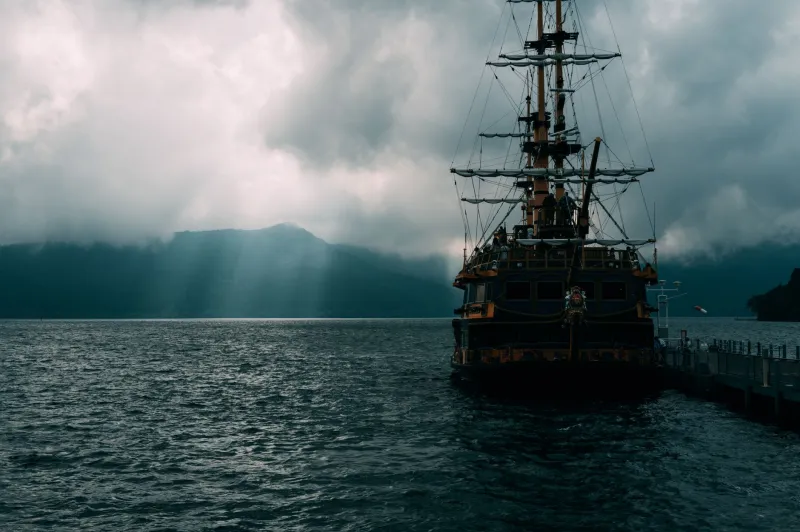
Let's be honest: most pirate stories are in the business of helping you feel good about cheering for criminals. The protagonists steal from people who had it coming, the violence is stylized and consequence-free, and by the end everyone's singing on a beach somewhere with a tankard full of something delightful. That's fine! That's a service! Sometimes you just want to watch someone swing on a rope and look fantastic doing it without having to think too hard about the economics of maritime theft.
But then there are the other pirate stories. The ones that look you dead in the eye and ask what exactly you think you're celebrating here. The ones where the theft has victims who aren't cartoonishly evil, where the violence lands with actual weight, where the charismatic captain's charm starts to feel like a manipulation tactic rather than a personality trait. Those stories are doing something genuinely harder and more valuable, and they deserve to be recognized for it.
Here at Pirate Rings, we've assembled a ranking of pirate entertainment by one very specific metric: how hard does it actually challenge your ethics? Not how dark it is—darkness without moral interrogation is just aesthetic. We're talking about stories that force you to engage with uncomfortable questions and don't provide easy answers.
Tier One: The Polite Discomfort Zone
Pirates of the Caribbean (Original Trilogy)
Look, we love Jack Sparrow. Everyone loves Jack Sparrow. But the original Pirates of the Caribbean trilogy is operating in what we'll generously call the polite discomfort zone—it gestures at moral complexity without ever really committing to it. The East India Trading Company is so comprehensively villainous that rooting for the pirates requires approximately zero ethical gymnastics. The violence is bloodless and balletic. The theft is abstract.
That said, At World's End earns some points for the way it depicts Pirate Lords as genuinely self-interested and often terrible, and for the suggestion that the "freedom" the pirates are fighting for is partly just the freedom to exploit people on their own terms rather than someone else's. It's not nothing. But it's not enough to move the needle significantly. You will sleep fine after watching this. That's the verdict.
Treasure Island (Most Adaptations)
Stevenson's source novel is actually more morally interesting than most of its adaptations give it credit for, but the various film and TV versions tend to sand down the edges until Long John Silver becomes a roguish mentor figure rather than a calculating opportunist who uses a child's trust as a resource to be depleted. The 2012 animated version Treasure Planet is the adaptation that leans hardest into Silver's genuine menace while also giving him the warmest redemption arc, which is a fascinating tension but ultimately resolves too neatly to rank higher.
Tier Two: Now We're Getting Somewhere
Oh, here we go. Black Sails, the Starz prequel to Treasure Island, is where things start getting genuinely uncomfortable. The show is deeply committed to depicting piracy as an economic and political phenomenon rather than a romantic adventure, and it's not interested in making that comfortable for you.
Flint is not a loveable rogue. He is a man whose genuine ideological commitments—a real, argued case for why the pirates' war against colonial authority is just—are inextricably tangled with personal grievances, pathological stubbornness, and a willingness to sacrifice anyone and anything to his vision. The show forces you to engage with his arguments on their merits even as you watch him do things that are genuinely hard to defend. By season three, you're not sure if you're watching a hero, a villain, or just a very smart person who has been broken by specific circumstances into a specific shape.
The violence in Black Sails has consequences. The theft has victims. The slave trade exists in the world and cannot be ignored. This is a show that earned its moral complexity by doing the actual work.
Edward Kenway's arc in Black Flag is one of gaming's more honest treatments of the pirate fantasy. The game lets you have enormous fun with the piracy mechanics—the ship combat is genuinely joyful—while simultaneously building a story about how Edward's selfishness and ambition destroy the people who love him. The game doesn't punish you for enjoying the piracy, but it makes sure you understand what it costs.
The moment when Edward finally reckons with how his choices have affected his crew and his family is earned because the game has been quietly building the case against him the entire time. It's not a lecture. It's a consequence. That's good storytelling and good ethics.
Tier Three: Actually Unsettling, We Mean It
The Lies of Locke Lamora (and the Gentleman Bastard Sequence)
Scott Lynch's fantasy heist series isn't strictly pirate fiction, but the second book, Red Seas Under Red Skies, goes full nautical and earns a place in this conversation. What Lynch does that most pirate fiction refuses to do is show the randomness of who gets hurt. Locke and Jean are clever and charming and the books are enormously fun to read, but Lynch is careful to show that their schemes have blast radii. People who didn't deserve what happened to them get caught in the crossfire. The protagonists notice this. They don't always do anything about it. That discomfort is the point.
The Long Way to a Small Angry Planet by Becky Chambers (and Wayfarers adjacents)
This is a softer inclusion, but Chambers' work and the broader trend of cozy-but-honest science fiction adjacent to pirate aesthetics earns a mention for the way it interrogates what it means to live outside conventional economic systems. The moral questions are gentler but they're real: what do you owe people you've never met? How do you live ethically in a system that wasn't built for ethics?
The True History of the Kelly Gang (and its cinematic/literary relatives)
Not pirate fiction, technically, but the outlaw-as-folk-hero genre is piracy's landlocked cousin, and the best entries in that tradition—including Peter Carey's Booker Prize winner and the recent film adaptation—are ruthless about refusing to let you romanticize the violence. The Kelly Gang kills people. Those people had families. The film shows you both the legitimate grievances that produced the gang and the genuine horror of what the gang does. That's the standard we're holding pirate fiction to.
The Gold Standard: Stories That Don't Flinch
The pirate entertainment that earns the highest marks for moral complexity shares a few characteristics. It treats violence as something that happens to specific people, not as choreography. It acknowledges that the economic systems pirates raid have real victims on multiple sides. It allows protagonists to be genuinely wrong about important things without immediately punishing them into a redemption arc. And it trusts the audience to sit with ambiguity rather than resolving every moral question into a satisfying answer.
Black Sails remains the benchmark in prestige TV. Assassin's Creed: Black Flag holds the gaming standard. And in fiction, the authors who refuse to let their pirate protagonists off the hook—who show the full cost of the freedom their characters are fighting for—are doing the most interesting work in the genre right now.
The rest? Perfectly enjoyable. Sleep-permitting. Which is sometimes exactly what you need.
But if you're ready to stare at the ceiling a little, you know where to sail.